

From Idea to Prototype: How KF Uses 3D Printing in Product Development
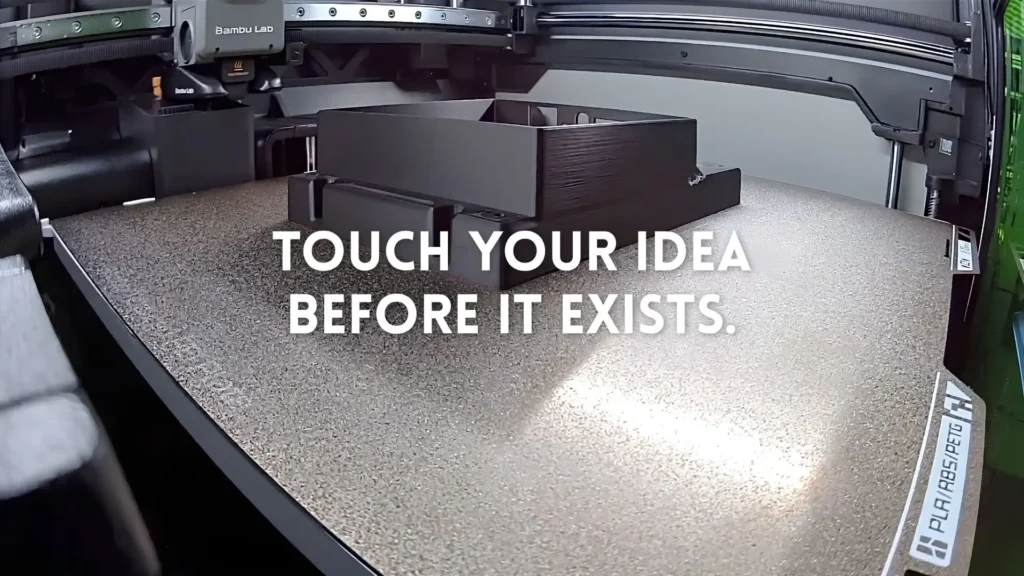
What If You Could Hold an Idea in Your Hands Before It Even Exists?
In the development of a new product, being able to quickly create a tangible prototype can make all the difference.
For Key Future, 3D printing has become a strategic tool within its R&D – Research & Development activities, allowing a design concept to be rapidly transformed into a physical model that can be observed, evaluated and tested.
Within just a few hours, a digital design can become something tangible.
Prototyping Earlier Means Correcting Earlier
A prototype makes it possible to identify potential issues while the product is still under development, before they can turn into more complex and costly modifications during production.
Through rapid prototyping, KF can assess several aspects of a design:
- design and geometries, identifying potential design issues;
- ergonomics, practically evaluating shapes and dimensions;
- assembly, checking compatibility between different components;
- interfaces and integration, simulating how the monitor will be used and integrated into the final application.
Moving from a digital model to a physical prototype therefore makes it possible to directly assess the design in the real world.
Fewer Iterations, More Control
Integrating 3D printing into the development process helps reduce the number of iterations required before reaching the final solution.
Testing and modifying a prototype during the early stages means being able to make changes quickly, reducing the risk of discovering potential issues only when the product has already progressed to later stages of development.
Rapid prototyping also helps reduce material waste and the costs associated with producing preliminary samples.
The result is a faster, more controlled and more flexible development process.
Technology at the Service of Design
For KF, 3D printing is not simply a technology for producing models.
It is a tool that enables better decisions throughout the development process, rapidly transforming a digital concept into something that can be analysed, modified and tested.
Because product development also means knowing how to put an idea to the test before investing in its production.
Fewer assumptions.
Fewer risks.
More control. That is how an idea becomes a KF product.